World Cup 2026: The Ultimate Guide to the 48-Team Era
World Cup 2026: The Complete Guide You Need to Know
The beautiful game is about to enter an era of unprecedented scale. For nearly a century, the FIFA World Cup has been the ultimate test of sporting excellence, but as we look toward the summer of 2026, the tournament is shedding its traditional skin. What awaits us is not just a competition, but a continental takeover.
Spanning three nations, the United States, Canada, and Mexico, the FIFA World Cup 2026 will be the largest, longest, and most diverse sporting event ever staged. We are moving from a 32-team bracket to a massive 48-nation field, increasing the match count from 64 to 104. From the high-altitude history of the Estadio Azteca to the high-tech marvels of the NFL’s premier stadiums, the infrastructure is ready. The fans are waiting. And the stakes have never been higher.
Whether you are a seasoned tactical analyst or a supporter planning a once-in-a-lifetime journey across North America, this guide breaks down every crucial detail of the 23rd edition of the World Cup.
The New Format: A 48-Team Revolution
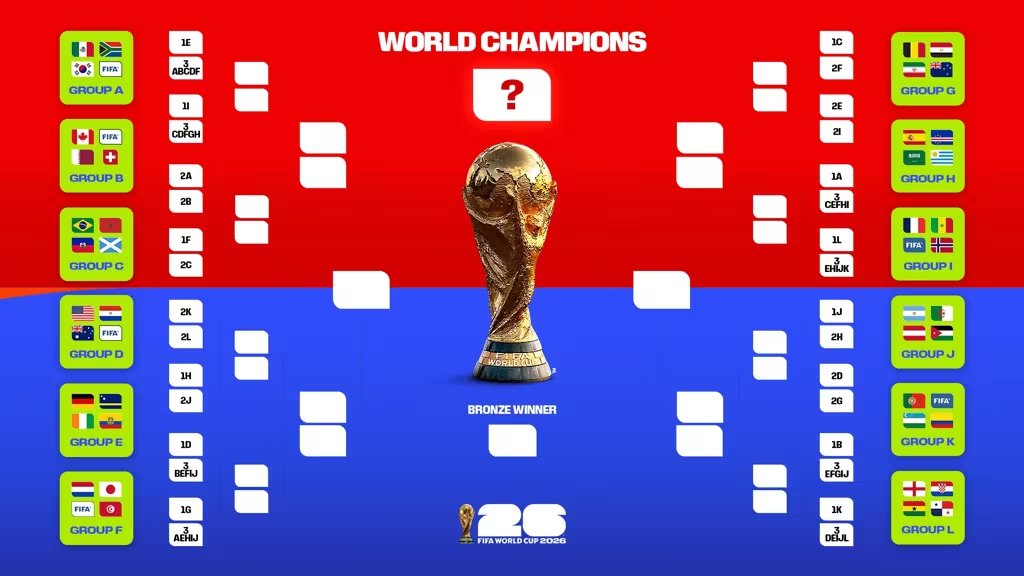
The most significant talking point of the 2026 cycle is the expansion. For the first time since 1998, FIFA has overhauled the World Cup 2026 format to accommodate 48 nations. While the decision initially sparked debate among purists, the final structure has been designed to maintain the high-stakes drama of the group stages.
12 Groups of Four
Discarding the early proposal of three-team groups (which many feared would lead to “convenient” draws in final matches), FIFA has confirmed a structure of 12 groups of four teams.
- The Top Two: The first and second-place finishers in each group will advance automatically.
- The Best Third-Place Teams: To round out a 32-team knockout bracket, the eight best third-placed teams will also progress.
- The Extra Round: This expansion introduces a Round of 32, meaning teams will now have to navigate five knockout games to reach the podium.
104 Matches in 39 Days
This format brings the total match count to a staggering 104. For fans, this means a relentless schedule of football—often four matches per day during the group stage—spanning nearly six weeks of competition. The eventual champions will have to play eight matches instead of the traditional seven, a grueling test of depth and endurance.
Key Dates: The World Cup 2026 Schedule
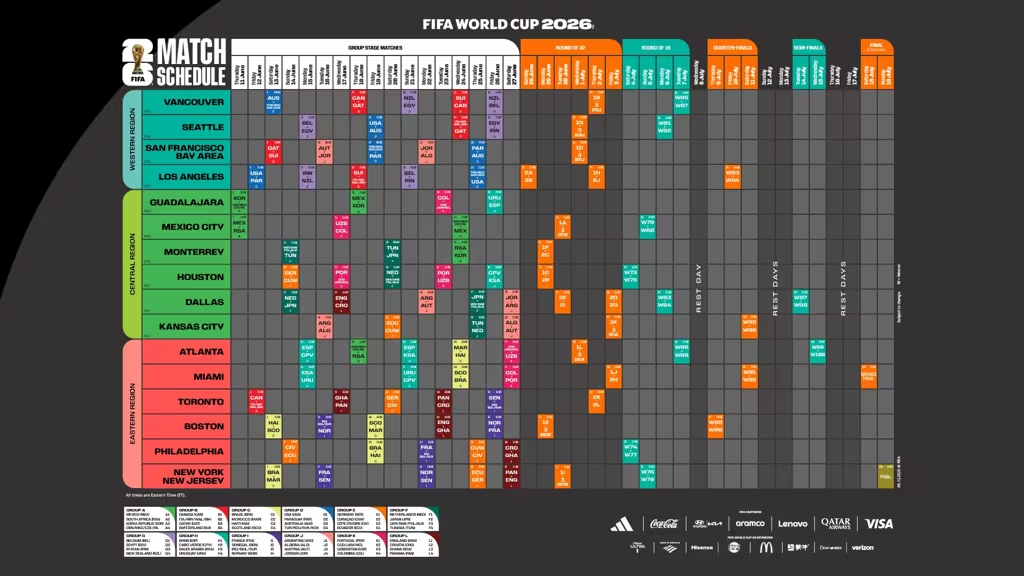
If you are planning your calendar, the World Cup 2026 dates are now set in stone. The tournament returns to its traditional Northern Hemisphere summer window after the winter detour of Qatar 2022.
- Opening Match: June 11, 2026 – Mexico City (Estadio Azteca)
- Group Stage: June 11 – June 27, 2026
- Round of 32: June 28 – July 3, 2026
- Round of 16: July 4 – July 7, 2026
- Quarter-finals: July 9 – July 11, 2026
- Semi-finals: July 14 – July 15, 2026 (Dallas and Atlanta)
- Third-Place Play-off: July 18, 2026 (Miami)
- The Final: July 19, 2026 – East Rutherford, New Jersey (New York New Jersey Stadium)
The choice of July 4th for a Round of 16 matchday in the United States is no coincidence; it coincides with the 250th anniversary of American independence, promising a holiday atmosphere unlike any other in sports history.
The Host Cities: 16 Venues Across Three Nations
The World Cup 2026 USA, Canada, and Mexico bid—collectively known as “United 2026″—will utilize 16 world-class venues. To manage the immense travel distances, FIFA has divided the host cities into three regional clusters: West, Central, and East.
| Region | Cities & Stadiums |
| Western Cluster | Vancouver (BC Place), Seattle (Lumen Field), San Francisco (Levi’s Stadium), Los Angeles (SoFi Stadium), Guadalajara (Estadio Akron) |
| Central Cluster | Kansas City (Arrowhead Stadium), Dallas (AT&T Stadium), Houston (NRG Stadium), Atlanta (Mercedes-Benz Stadium), Monterrey (Estadio BBVA), Mexico City (Estadio Azteca) |
| Eastern Cluster | Toronto (BMO Field), Boston (Gillette Stadium), New York/New Jersey (MetLife Stadium), Philadelphia (Lincoln Financial Field), Miami (Hard Rock Stadium) |
Venue Spotlights
- Estadio Azteca (Mexico City): A cathedral of the sport, it will become the first stadium to host an opening match in three different World Cups (1970, 1986, 2026).
- SoFi Stadium (Los Angeles): Likely the most expensive stadium ever built, this venue will host the USMNT’s opening game on June 12, 2026.
- MetLife Stadium (New York/New Jersey): Officially designated as the “New York New Jersey Stadium” for the tournament, this 82,500-seat giant will host the grand finale.
Qualification: The FIFA World Cup 2026 Teams
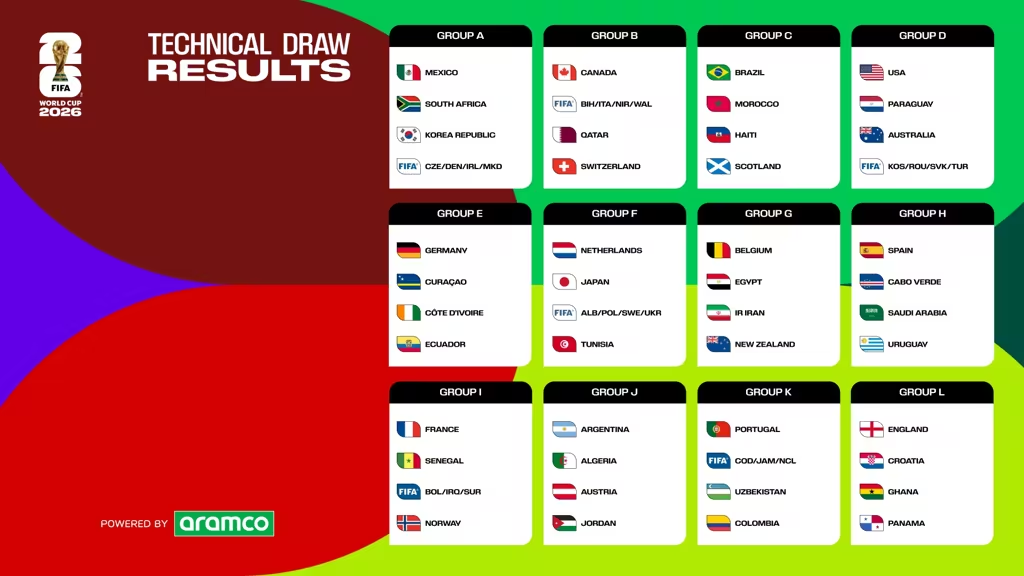
With 48 spots available, the qualification process has become a saga of its own. As of late 2025, several berths are already confirmed, while others will be decided in the high-tension Intercontinental Play-offs in March 2026.
Guaranteed Slots by Confederation:
- AFC (Asia): 8 direct spots + 1 play-off
- CAF (Africa): 9 direct spots + 1 play-off
- CONCACAF (North America): 6 direct spots (including hosts USA, Canada, Mexico) + 2 play-offs
- CONMEBOL (South America): 6 direct spots + 1 play-off
- OFC (Oceania): 1 direct spot + 1 play-off
- UEFA (Europe): 16 direct spots
The expansion ensures that we will see several debutants. Nations like Uzbekistan, Jordan, and Cape Verde have already secured or are on the verge of historic first appearances, adding new flavors and storylines to the global stage.
The Automatic Qualifiers
As co-hosts, the USA, Canada, and Mexico have all bypassed the qualifying gauntlet. However, this comes with its own set of challenges; without competitive qualifiers, these nations have relied on friendlies and the CONCACAF Nations League to keep their squads sharp for the scrutiny of a home tournament.
Logistics for Fans: Travel and Ticketing
Navigating a tournament that spans from Vancouver to Mexico City requires meticulous planning. Unlike previous World Cups held in smaller nations like Qatar or Germany, fans in 2026 should expect to rely heavily on air travel.
Regional Clustering
FIFA’s clustering system is designed to help fans stay within one region during the group stage. If you follow a specific team, they will likely play their first three matches within the same cluster (e.g., the West Coast). However, once the knockout rounds begin, teams and fans will be shuffled across the continent.
Ticketing Strategy
As of December 2025, the Random Selection Draw phase is currently open.
- The Supporter Entry Tier: Following backlash over high prices, FIFA introduced a limited number of $60 tickets for loyal fans of qualified nations.
- Demand: FIFA has reported over 20 million requests in the current phase alone.
- Resale: Official resale platforms will be the only safe way to purchase tickets outside the lottery, as digital ID requirements will be strictly enforced at stadium gates.
Tactical Trends: What to Expect on the Pitch
With 104 matches, squad depth will be the ultimate currency. The introduction of an extra knockout round (the Round of 32) means that “peaking too early” could be a fatal mistake.
- High-Intensity Pressing: In the North American summer heat, managing energy will be vital. Expect to see more strategic “rest-defense” and tactical substitutions.
- The Rise of the Underdog: The 48-team format allows more “low-block” specialists to enter the fray. We may see more defensive masterclasses from smaller nations looking to snatch a draw and advance as a best third-place team.
- Home Field Advantage: For the USA, Mexico, and Canada, the psychological boost of home crowds cannot be overstated. Mexico, in particular, remains nearly invincible at the altitude of the Estadio Azteca.
FAQ: Frequently Asked Questions
Q: How many teams are in the 2026 World Cup?
A: There will be 48 teams, an increase from the 32-team format used between 1998 and 2022.
Q: Which city will host the World Cup 2026 Final?
A: The final will be held at MetLife Stadium in East Rutherford, New Jersey, on July 19, 2026.
Q: Can I travel between host countries easily?
A: While travel between the USA, Canada, and Mexico is common, fans will need to ensure they have the correct visas for each specific country. FIFA is working with all three governments to streamline a “fan-pass” system, but standard immigration rules still apply.
Q: Is there a Round of 32 in 2026?
A: Yes. Because there are 48 teams, the knockout stage begins with 32 teams instead of 16.
Conclusion and Future Outlook
The FIFA World Cup 2026 represents a gamble on the grandest scale. By opening the doors to 48 nations, FIFA is betting that the increased inclusivity will outweigh the logistical headaches of a three-country tournament. What we are set to witness is the “World’s Fair” of football—a 39-day celebration that will likely break every attendance and revenue record in the history of the sport.
As we move toward the final draw in late 2025 and the play-offs in March 2026, the picture is becoming clear. The world is coming to North America, and for the first time, the continent is truly ready to host the world.